Wednesday, 16 September 2015

1.1 - Outline the Culture of the film industry


What do you know about the working culture of the film industry?

Within the film industry there is a large group of people who have to work well together as a team. They must do this to meet deadlines for different projects the company is working on. With this comes high amounts of pressure. The projects which are carried out by the companies often require the team members to work for long amounts of time making there jobs have long hours. Quite often projects can involve shooting in many different locations eg: in different places in the uk or even all  over the world. Also work oppertunities can come in many different locations and are often not as close as wanted/expected, causing people to have to move and change their lifestyles to fit their work. People working within the film industry are also required to have a flexible lifestyle allowing them to attend work whenever required, so are not otherwise occupied. Contracts are also generally shrort throughout the film industry making working in the industry difficult as you will sometimes have to switch from different locations for different job oppertunities.   


What qualities do you need to work in the film industry?

There are many qualities and skills that are required to work in the film industry these include:
inittative, getting alond with people, determination, self confidence, prepare to fail, flexible attitude, team player, listen to others,timemanagement and ability to work under pressure.


Tuesday, 15 September 2015

1.2 - Identify Time Management Skills


Why is time management important in the film industry?

When working in the film industry there are many deadlines that have to be met as projects have to be completed by certain dates. For these deadlines to me met good time managing skills are reqired of the the workers in the industry. When working in the film industry you are always working in a team, meaning the other team members are are relying on you to complete your chosen section of the project making this another reason why team management skills are required. Often only one job can be carried out by members at a time meaning if one project is not complete the next can not comence.

Films can also often go over time, this delays things such as starting the next projects and income. Time should also be managed when shooting as things such as weather and light may change when on shoot.


Give at least 4 examples of good time management skills

Self discipline - being able to manage your own time effectively
Making schedules and call shets so that you know where and when you are meant to be somewhere
To do lists and priority planning
Being on time so that you are reliable and production can start when needed.

Monday, 14 September 2015

1.3 - Describe the key aspects of health and safety when working on film productions


What needs to be considered in terms of health and safety when working on a film production?

You need to be aware of potential hazards such as electrical wires on the floor, electrics in general. Lots of people all working alongside each other sometimes in quite confined spaces. 


What can be put in place to ensure health and safety risks are minimised?

Risk assessment need to be made prior to production to highlight risks and work out ways of managing them,

First Aiders need to be available at all times and first aid kits should be clearly marked as well as fire exits


Upload an example of a risk assessment that would have been used in the production week. 


Sunday, 13 September 2015

1.4 - Explain how regulations may affect the use of copyright materials


How do regulations affect the use of copyright materials?

When following the regulations of copyright you need to be aware of the following things:

The current act is the Copyright, Designs and Patents Act 1988. Rights covered. The law gives the creators of literary, dramatic, musical, artistic works, sound recordings, broadcasts, films and typographical arrangement of published editions, rights to control the ways in which their material may be used.

Saturday, 12 September 2015

1.5 - Identify materials that may be subject to copyright


What materials may be subject to copyright?

The following are examples of materials which may be subject to copyright:

  • Literary (lyrics, manuscripts, documents etc.)
  • Dramatic (plays, dances)
  • Artistic (Photos, paintings, architecture, technical drawing etc.)
  • Publishing Editions (magazines, articles)
  • Sound Recordings
  • Films (programmes, broadcasts)


How has copyright regulation affected your film production?

The copyright regulations affected our film production. It affected was the range of music of which we could use throughout our production. In response to this we decided to record/produce all of our own music for the production. The sound effects we also produced ourselves through foley recording, as many we would've considered using were subject to copyright.  

Friday, 11 September 2015

2.1 – 2.2 - Identify Key job roles and responsibilities in the film industry and describe the structure and interrelationship of the production department


Outline the key job roles on a film production

The key jobs within film production are split in to three different categories:

  • Creative
  • Management 
  • Editorial
Creative contains jobs such as: Writer, director, key production assistant and location scout

Management contains jobs such as: Production manager, executive producer, location manager and dialogue manager.

Editorial contains: Script supervisor
  

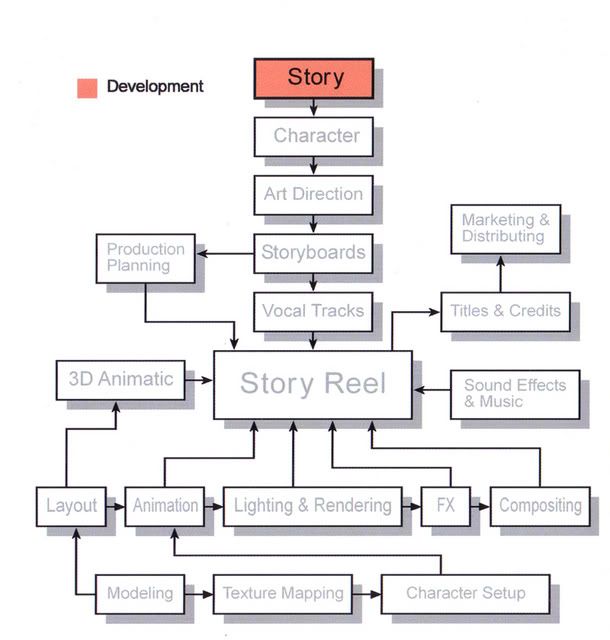
Create a flowchart or mind map of how these roles interrelate


How have the different roles interrelated during your production?

The different roles which have had to collaborate throughout the production are roles that are in the same categories in the production flowchart displayed above. In the production the Directors and writers worked together, the sound effects team and music production etc. 


Thursday, 10 September 2015

2.3 – Outline the potential progression routes into the film industry and wider sector


What could be your potential progression route into the film industry?

My potential progression route into the film industry would be to firstly see if it was possible for me o get an apprenticeship with the British Film Industry to give me a wider range of knowledge and experience of the sector i will be entering. I will also need to train myself. A lot of practice making different films would increase my knowledge and experience as well as making me a more skilled film producer. With the films i had previously made i would then try and enter a university, specialising in film production to allow me to progress further into the industry and allow me more opportunities. Throughout the University experience i would continue in producing short films and i would also be looking for work experience at big film production companies.


Wednesday, 9 September 2015

2.4 – Outline the relationship between the film industry and wider creative media sector


How is the film industry influenced by the wider creative media sector?

The film industry is influenced by many different media sectors, for example the games industry. Once a game has gained a big enough fanbase, and enough money (so usually AAA games) they can grow to different forms of media, one of these being film. Many games are recreated as a film or involve spin off stories that work around those of the game. For example, Tomb Raider's Lara Croft films, Silent hill and, the soon to be released, Warcraft film.

Another media sector that influences the film industry is the that of books. A large amount of plots are based upon popular book titles, which tend to result in successful films as its appeals to a wide audience. This is because fans of the books are likely to watch the film to see how the story is portrayed in a visual format, and also people who have wanted to read the book but haven't, for reasons including lack of time for example, have the chance to see the story in this way, rather than taking the time to read it. 


Create a diagram showing the relationship between film and the wider creative sector


Tuesday, 8 September 2015

3.1 – Describe the impact of your own behaviours on others


How do you feel you have worked well with others on the production team?

I feel we all worked well in a team together to complete the short film production. Everybody on the team got along with each other so there were no fallings out within the group allowing teamwork to be permanently present. I also believe the team successfully managed the time correctly to complete different sections of the production and overall the film was finished on time, backing this point up. I also think the great team cohesion was caused by the positive attitude the members had towards the task and other members.   

What was the impact of your behavior on others?

I felt that i encouraged people when they were carrying out there activities making them feel more confident throughout the production. I also complimented people on the work and contributions they had mad to the project.

Monday, 7 September 2015

3.2 – Identify the key factors for effective working relationships


What qualities are needed to work well with others?

Positive attitudes: A positive attitude from each of the members involved in the production increases the moral and overall teamwork of the group making the task more enjoyable and easier to complete.

Communication: Communication is vital for the correct team cohesion. If communication does not occur as much as needed, then mistakes will be made within the group and the production of the film, affecting things such as time management and teamwork.

Teamwork: Teamwork is one of the most vital things when working in a group. In order for teamwork to be carried out properly many other things need to operate successfully too, such as communication. If the members aren't working together to complete the task then it will not get completed as quickly or efficiently as possible, and mistakes could be made. 

Sunday, 6 September 2015

3.3 – Interact with others to encourage collaborative thinking and teamwork


Give an example of when you worked with others to encourage collaborative thinking and teamwork

An example of this was during the taster weekend where my group worked together to create an effective piece of work where we worked as a team and used make up and a DSLR camera to make a short stop motion film of a snake slithering up a body and killing the character. During this activity we had to collaborate our thoughts to think of the overall subject of the film. We also had to have good teamwork when working in the team to allow the job to be done correctly, to the highest quality and so that no mistakes are made. We also made sure that everyone had a positive attitude throughout the group and made sure we complimented each other when they did well and made a good contribution to the group.  

Saturday, 5 September 2015

4.1 – 4.2 - Identify the resources needed to meet film production requirements and the technical skills and equipment required for your production role


What resources are needed in film production?

The resources that were needed in the production were:


  • People (production team and actors etc.)
  • Equipment (cameras, tripods, green screen etc.)
  • Knowledge e.g. camera angles
  • Finance
  • locations 
  • venues


What is your production role?

My role within the group was as part of the live action team. This meant a large amount of the time throughout the production i spent recording and taking pictures in the different locations that were allocated. I also played a part in the sound effects/foley team, gathering different materials and doing different actions and recording the sounds made to use in the production. 


What do you have to do to carry out this role?

I have done large amounts of shooting in the different allocated locations as well as recording a lot of foley for the production.


What skills do you need to carry out your production role?

We needed to have an overall idea of what objects/activities would make the correct sounds to use within the film for the foley production. In the live action we had had to know the different things to film, take pictures of. We also had to know all of the different camera angles to use throughout the film. 


What equipment and planning documents do you need to carry out this role?

The equipment i needed was:

  • Tripods
  • Camera
  • Sound recording equipment/programmes

Friday, 4 September 2015

4.3 - 4.4 - Review your own technical skills and use of equipment and Identify sources of feedback on your performance


How well do you think you have carried out your role in production?

I believe that i have carried out my role well within the group as i think have been a great contribution and have provided some good content to the group. 


How do you think your technical skills have developed in this role?

I think that i have became a lot more skilled at thinks such as live action. This will help me in the future and allow me to do more complex things with film.


How do you think your knowledge and understanding of equipment and planning documents have developed in this role?

I also think my knowledge in this sector has developed greatly, i feel i have a much wider knowledge of the use of cameras, tripods, microphone and sound recording/sound recording software.

Ask your tutors and peers: How well did I carry out my role in production? How did my technical skills and use of equipment developed in this role? Then answer: 

What feedback have you received about your technical skills and use of equipment?

Thursday, 3 September 2015

4.5 – Describe areas for development in your current knowledge and understanding of skills


What is your current knowledge and understanding of film?

I have a basic experience of many processes within the film making industry, this being through the BFI film academy experience and the work i carry out with my college taking part in my media studies A-level.

What skills do you have?

I have basic recording/camera skills, I have a wide range of knowledge of camera angles which i have learnt again from studying media studies, i also have basic editing skills and i can now successfully record sound and produce foley which i have learnt through the BFI academy.   

How would you like you develop your knowledge and skills? Give reasons.

I would like to increase my knowledge of live action and camera work, even though this is my strongest sector it is by far the one i find most enjoyable so to increase my knowledge in it would help me to potentially find me a future in the film industry.

Wednesday, 2 September 2015

5.1 – Review and critique a short film production


Review of one or more short films

The number 23 Title Sequence
Analysis

Essay question: Describe how The Number 23 title sequence is a typical example of the thriller genre.

The film ‘The Number 23’ is a strong example of a film within the thriller genre. This essay I will be answering the essay question: Describe how The Number 23 title sequence is a typical example of the thriller genre. This question is interesting as it requires you to supply an answer based on your overall knowledge of film and genre through things such as Mise-en-scene etc.

The Mise-en-scene throughout the title sequence successfully anchors to the audience the film’s genre is that of thriller. There is not a strong setting throughout the sequence as the sequence is entirely looking at a white page where conventions of the form are displayed such as: directors, producers special effects and actors. This space is also quite blank apart from the writing and design in the sequence, this is done to give the feel of emptiness, relating to the film's theme of mystery and possible implying a search for clues. The colour scheme used throughout the title sequence also strongly signifies the genre of thriller. Some other examples of thrillers which use the colour scheme to represent the genre are: Se7en, Batman The Dark Knight Rises and Shutter Island. The colours used throughout ‘The Number 23’ title sequence are: black, white and red. The colour white is used for background, chosen to give the sequence a feel of emptiness and undiscovery as well as to look like paper. Black is used for the writing to stand out from the background well making the writing bold and the red is used when the blood is shown in the sequence this stands out very well on the white background so is well chosen, however is also used to resemble: blood, gore and horror etc, confirming the thriller genre. The font used in the typography is well chosen. The font is also designed to look old and as if it has been written by a typewriter instead of my human hand, adding more mystery to the sequence. The use of the typewriter styled font adds suspense and suspicion making the audience ask things like: ‘who is the writer behind the typewriter?’ and ‘what kind of person will be featuring in this  is behind this?’. The colouring of the typography used in the sequence is mainly black but in come cases red. These colours are chosen as they stand out well from the white background and also because they resemble conventions of thriller such as darkness and blood.

The cinematography used is typical of a thriller in many ways. The framing in the sequence is cleverly done as it leaves a lot of empty space. There is a variety of different transitions throughout the title sequence most of them being quick flash transitions from one location of the paper to another, or a scrolling transition which scrolls across the background paper design to another convention of the form such as director etc. The speed of the sequence is steady as the only thing shown will be writing, numbers or blood flowing. However the transitions are quick and in some cases unexpected to surprise the audience at times. The blood is used for things such as fading in and out text. Overall the blood is added to make the audience feel more insecure (the blood connotations death,murder etc)  and to set the feel for the film the audience are going to be viewing.

The sound used throughout the title sequence is one of the major factors that makes the sequence so effective and is much part of the thriller genre. All of the sound used is non diegetic as there is no characters speaking or actions happening throughout the clip. The Music in the background is quiet and however successfully gives the sequence elements of sinister and unease. The sound effects are usually louder than the music throughout the sequence to stand out, and are usually used when more text is entering the screen. The juxtaposition of the sound effects and the music used throughout the sequence is very effective. The quiet background music and sharp eerie sound effects contrast well to give a great overall atmosphere and succeed in keeping the audience  on the edge of their seats and eager to watch the film. The sound effects are also at different volumes throughout the sequence, some are a lot louder than the music making the audience jump and setting the genre well.

To conclude, the Number 23 title sequence is a typical example of a thriller genre. This is successfully portrayed through different factors such as:  Mise-en-scense, Cinematography and editing and Sound. I think all of these factors equally contribute supply the overall thriller genre and to set the scene for the film the audience is about to witness.
James Edge

Tuesday, 1 September 2015

5.2 – Review and discuss own choice of British film productions and world film productions


Review of British or World film features (ideally in cinema).

The number 23 Title Sequence
Analysis

Essay question: Describe how The Number 23 title sequence is a typical example of the thriller genre.

The film ‘The Number 23’ is a strong example of a film within the thriller genre. This essay I will be answering the essay question: Describe how The Number 23 title sequence is a typical example of the thriller genre. This question is interesting as it requires you to supply an answer based on your overall knowledge of film and genre through things such as Mise-en-scene etc.

The Mise-en-scene throughout the title sequence successfully anchors to the audience the film’s genre is that of thriller. There is not a strong setting throughout the sequence as the sequence is entirely looking at a white page where conventions of the form are displayed such as: directors, producers special effects and actors. This space is also quite blank apart from the writing and design in the sequence, this is done to give the feel of emptiness, relating to the film's theme of mystery and possible implying a search for clues. The colour scheme used throughout the title sequence also strongly signifies the genre of thriller. Some other examples of thrillers which use the colour scheme to represent the genre are: Se7en, Batman The Dark Knight Rises and Shutter Island. The colours used throughout ‘The Number 23’ title sequence are: black, white and red. The colour white is used for background, chosen to give the sequence a feel of emptiness and undiscovery as well as to look like paper. Black is used for the writing to stand out from the background well making the writing bold and the red is used when the blood is shown in the sequence this stands out very well on the white background so is well chosen, however is also used to resemble: blood, gore and horror etc, confirming the thriller genre. The font used in the typography is well chosen. The font is also designed to look old and as if it has been written by a typewriter instead of my human hand, adding more mystery to the sequence. The use of the typewriter styled font adds suspense and suspicion making the audience ask things like: ‘who is the writer behind the typewriter?’ and ‘what kind of person will be featuring in this  is behind this?’. The colouring of the typography used in the sequence is mainly black but in come cases red. These colours are chosen as they stand out well from the white background and also because they resemble conventions of thriller such as darkness and blood.

The cinematography used is typical of a thriller in many ways. The framing in the sequence is cleverly done as it leaves a lot of empty space. There is a variety of different transitions throughout the title sequence most of them being quick flash transitions from one location of the paper to another, or a scrolling transition which scrolls across the background paper design to another convention of the form such as director etc. The speed of the sequence is steady as the only thing shown will be writing, numbers or blood flowing. However the transitions are quick and in some cases unexpected to surprise the audience at times. The blood is used for things such as fading in and out text. Overall the blood is added to make the audience feel more insecure (the blood connotations death,murder etc)  and to set the feel for the film the audience are going to be viewing.

The sound used throughout the title sequence is one of the major factors that makes the sequence so effective and is much part of the thriller genre. All of the sound used is non diegetic as there is no characters speaking or actions happening throughout the clip. The Music in the background is quiet and however successfully gives the sequence elements of sinister and unease. The sound effects are usually louder than the music throughout the sequence to stand out, and are usually used when more text is entering the screen. The juxtaposition of the sound effects and the music used throughout the sequence is very effective. The quiet background music and sharp eerie sound effects contrast well to give a great overall atmosphere and succeed in keeping the audience  on the edge of their seats and eager to watch the film. The sound effects are also at different volumes throughout the sequence, some are a lot louder than the music making the audience jump and setting the genre well.

To conclude, the Number 23 title sequence is a typical example of a thriller genre. This is successfully portrayed through different factors such as:  Mise-en-scense, Cinematography and editing and Sound. I think all of these factors equally contribute supply the overall thriller genre and to set the scene for the film the audience is about to witness.
James Edge