Well done James and thank you for taking part in this years BFI Film Academy. This blog covers a true reflection of what you achieved. I think the group gained a great deal from you being around. You always had something creative to add and I witnessed your creative skills develop during the film production week. The light drawing animation added an extra depth to the final film and you seemed more confident in all the film making kit.
You can find a rough copy of the film here:
https://vimeo.com/148244026
(A password for the film has been sent to you via an email)
Please do not share this yet on social media as this is still only a rough cut but feel free to show universities and other organisations or add it to your showreel.
Wishing you great success for the future
Spencer Whalen
MediaActive
Wednesday, 9 December 2015

Wednesday, 16 September 2015
1.1 - Outline the Culture of the film industry
What do you know about the working culture of the film industry?
Within the film industry there is a large group of people who have to work well together as a team. They must do this to meet deadlines for different projects the company is working on. With this comes high amounts of pressure. The projects which are carried out by the companies often require the team members to work for long amounts of time making there jobs have long hours. Quite often projects can involve shooting in many different locations eg: in different places in the uk or even all over the world. Also work oppertunities can come in many different locations and are often not as close as wanted/expected, causing people to have to move and change their lifestyles to fit their work. People working within the film industry are also required to have a flexible lifestyle allowing them to attend work whenever required, so are not otherwise occupied. Contracts are also generally shrort throughout the film industry making working in the industry difficult as you will sometimes have to switch from different locations for different job oppertunities.
Within the film industry there is a large group of people who have to work well together as a team. They must do this to meet deadlines for different projects the company is working on. With this comes high amounts of pressure. The projects which are carried out by the companies often require the team members to work for long amounts of time making there jobs have long hours. Quite often projects can involve shooting in many different locations eg: in different places in the uk or even all over the world. Also work oppertunities can come in many different locations and are often not as close as wanted/expected, causing people to have to move and change their lifestyles to fit their work. People working within the film industry are also required to have a flexible lifestyle allowing them to attend work whenever required, so are not otherwise occupied. Contracts are also generally shrort throughout the film industry making working in the industry difficult as you will sometimes have to switch from different locations for different job oppertunities.
What qualities do you need to work in the film industry?
There are many qualities and skills that are required to work in the film industry these include:
inittative, getting alond with people, determination, self confidence, prepare to fail, flexible attitude, team player, listen to others,timemanagement and ability to work under pressure.
There are many qualities and skills that are required to work in the film industry these include:
inittative, getting alond with people, determination, self confidence, prepare to fail, flexible attitude, team player, listen to others,timemanagement and ability to work under pressure.
Tuesday, 15 September 2015
1.2 - Identify Time Management Skills
Why is time management important in the film industry?
When working in the film industry there are many deadlines that have to be met as projects have to be completed by certain dates. For these deadlines to me met good time managing skills are reqired of the the workers in the industry. When working in the film industry you are always working in a team, meaning the other team members are are relying on you to complete your chosen section of the project making this another reason why team management skills are required. Often only one job can be carried out by members at a time meaning if one project is not complete the next can not comence.
Films can also often go over time, this delays things such as starting the next projects and income. Time should also be managed when shooting as things such as weather and light may change when on shoot.
Give at least 4 examples of good time management skills
Self discipline - being able to manage your own time effectively
Making schedules and call shets so that you know where and when you are meant to be somewhere
To do lists and priority planning
Being on time so that you are reliable and production can start when needed.
Monday, 14 September 2015
1.3 - Describe the key aspects of health and safety when working on film productions
What needs to be considered in terms of health and safety when working on a film production?
You need to be aware of potential hazards such as electrical wires on the floor, electrics in general. Lots of people all working alongside each other sometimes in quite confined spaces.
What can be put in place to ensure health and safety risks are minimised?
Risk assessment need to be made prior to production to highlight risks and work out ways of managing them,
First Aiders need to be available at all times and first aid kits should be clearly marked as well as fire exits
Upload an example of a risk assessment that would have been used in the production week.


Sunday, 13 September 2015
1.4 - Explain how regulations may affect the use of copyright materials
How do regulations affect the use of copyright materials?
When following the regulations of copyright you need to be aware of the following things:
- The legislation
- Copyright and Patents act 1988
- The copyright law
The current act is the Copyright, Designs and Patents Act 1988. Rights covered. The law gives the creators of literary, dramatic, musical, artistic works, sound recordings, broadcasts, films and typographical arrangement of published editions, rights to control the ways in which their material may be used.
Saturday, 12 September 2015
1.5 - Identify materials that may be subject to copyright
What materials may be subject to copyright?
The following are examples of materials which may be subject to copyright:
- Literary (lyrics, manuscripts, documents etc.)
- Dramatic (plays, dances)
- Artistic (Photos, paintings, architecture, technical drawing etc.)
- Publishing Editions (magazines, articles)
- Sound Recordings
- Films (programmes, broadcasts)
How has copyright regulation affected your film production?
The copyright regulations affected our film production. It affected was the range of music of which we could use throughout our production. In response to this we decided to record/produce all of our own music for the production. The sound effects we also produced ourselves through foley recording, as many we would've considered using were subject to copyright.
Friday, 11 September 2015
2.1 – 2.2 - Identify Key job roles and responsibilities in the film industry and describe the structure and interrelationship of the production department
Outline the key job roles on a film production
The key jobs within film production are split in to three different categories:
- Creative
- Management
- Editorial
Creative contains jobs such as: Writer, director, key production assistant and location scout
Management contains jobs such as: Production manager, executive producer, location manager and dialogue manager.
Editorial contains: Script supervisor
Create a flowchart or mind map of how these roles interrelate

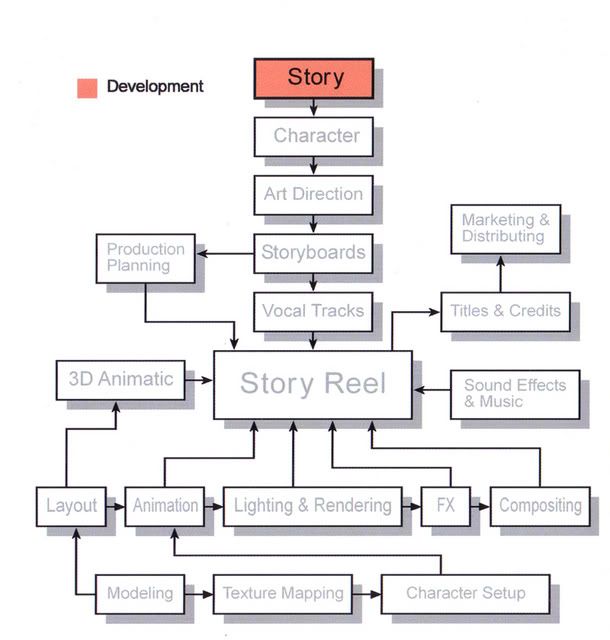

How have the different roles interrelated during your production?
The different roles which have had to collaborate throughout the production are roles that are in the same categories in the production flowchart displayed above. In the production the Directors and writers worked together, the sound effects team and music production etc.
Subscribe to:
Posts (Atom)